
| December 17, 2025
Hearing God’s Voice in Natural Phenomena
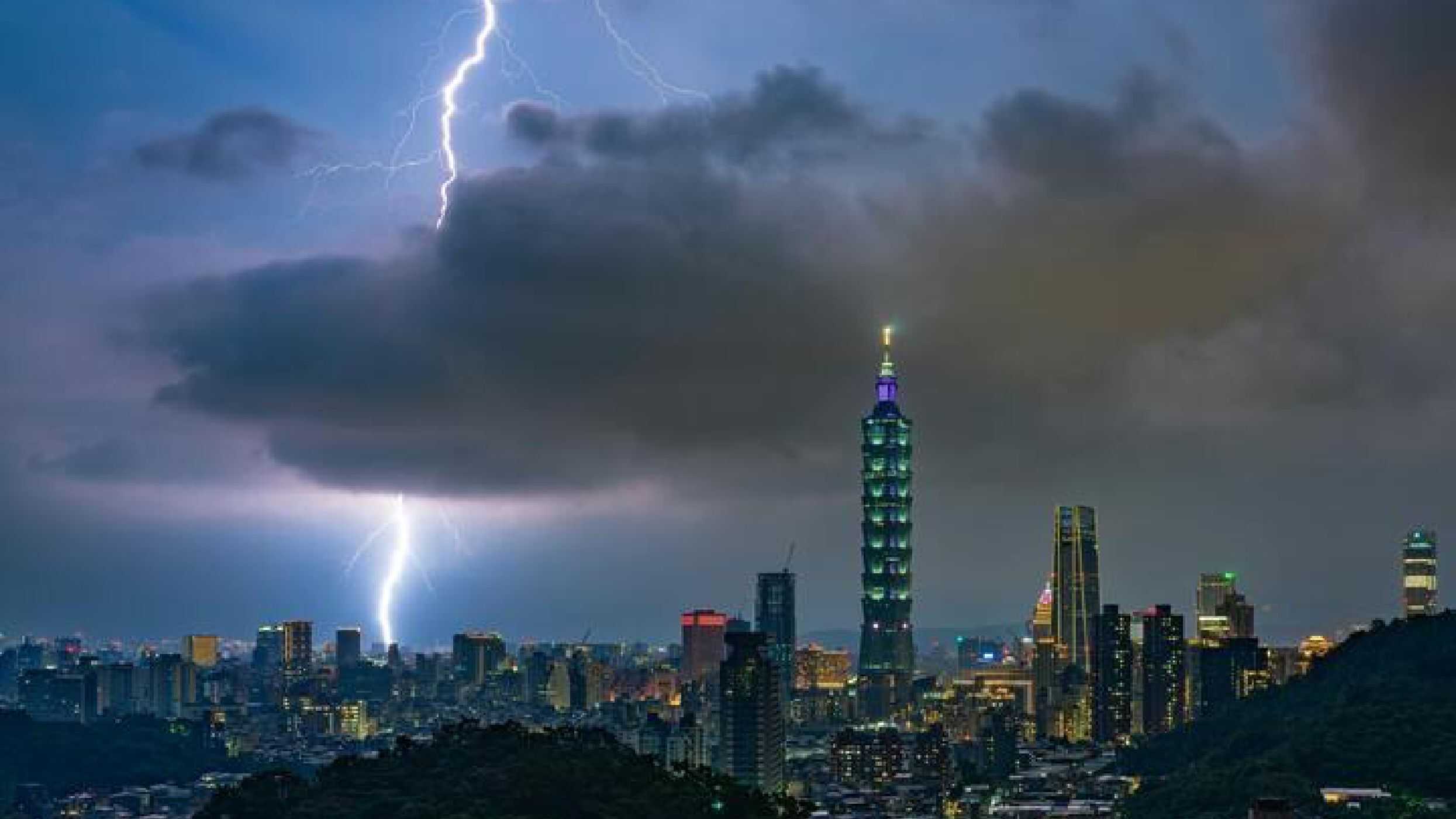
Taiwan is no stranger to the sound of thunder, the shaking of the earth, or the howling of typhoon winds. Each year, our Formosa island faces natural forces that remind us of our fragility—earthquakes that unsettle the ground beneath our feet, storms that flood our streets and uproot our trees, and thunder that rolls across our mountains and seas. These natural phenomena are not foreign interruptions. They are part of the rhythm of life for those who dwell on this island.
Yet, have we ever paused in such moments—not merely to seek shelter—but to listen? Could it be that in the roaring thunder, the cracking trees, and the trembling ground, God is speaking? Psalm 29 invites us into this listening posture. It is not only a psalm about the sounds of nature but also a psalm about reverent hearing. The psalmist proclaims, “The voice of the LORD is over the waters… The voice of the LORD is powerful… The voice of the LORD breaks the cedars.” This refrain—“the voice of the LORD”—repeats seven times, echoing through the temple of creation. In an age overwhelmed by noise—social media chatter, political disputes, and even religious slogans—the greatest challenge for Taiwanese Christians is not the absence of sound but the absence of hearing. Psalm 29 calls us to recover a spirituality that listens for the divine voice resonating through the natural world.
The Voice of the LORD as Polysemous in Natural Phenomena
To be sure, Psalm 29 deliberately employs the phrase “the voice of the LORD” rather than “the word of the LORD,” as used in Psalm 19, thereby limiting and defining the mode
through which divine communication is expressed in natural phenomena. It also refrains from using “the noise of the LORD,” for the “voice of the LORD” is not a meaningless or chaotic sound but an intelligible and purposeful expression—one that conveys divine intent rather than mere volume or disturbance.
The voice of the LORD is polysemous, i.e., it resists confinement to a single, fixed meaning. Moreover, this polysemy depends upon the spiritual condition of those who experience and interpret it. Just as human beings differ in spiritual depth and sensitivity, so too does the message they perceive from the divine voice vary in meaning and effect. The same natural phenomenon can evoke fear in some, awe in others, and faith in yet others. Thus, the following are possible messages of the voice of the LORD as revealed through natural phenomena.
The Voice of the LORD Speaks of Yahweh’s Theophany
While God is present throughout the created world, He manifests His presence in distinctive ways—sometimes through the grandeur and power of natural phenomena. In modern Taiwan, shaped by education, science, and advanced computer chips and technology, some believers struggle with the tension between scientific explanations and the biblical interpretation of natural events. Yet Psalm 29’s worldview refuses to separate theology from ecology, or faith from physics. To the scientific mind, lightning is a discharge of electricity between clouds and the ground; to the faithful heart, it is also the flash of divine presence. To the meteorologist, thunder is sound energy caused by the rapid expansion of heated air; to the psalmist, it is the echo of God’s mighty power. Psalm 29 does not deny scientific explanations—it deepens them. It reminds us that the laws of nature are not independent of God; they are the continuous expression of His sustaining presence and the servants of His divine purpose.
Moreover, although modern Taiwan has prospered economically, spiritual emptiness and moral fragmentation often accompany material success. Consumerism, performance pressure, and digital distraction drown out the divine voice. Psalm 29 pierces through this noise with its thunderous reminder that God’s voice still speaks and cannot be domesticated. Just as the psalmist’s storm dethrones the false god Baal, God’s voice today calls us to dethrone our own idols—money, success, nationalism, and even religious pride. When typhoons or earthquakes humble us, they expose the illusion of control and remind us that we are creatures, not creators. For Taiwan Christians, this realization reshapes both ecological and spiritual imagination: the typhoon is not merely a meteorological event, but a moral and spiritual summons. When mountains quake and trees break, they remind us that all creation reverberates with the divine message—God’s voice resounds in the waves that crash upon our shores and in the winds that sweep across our plains.
The Voice of the LORD Speaks of Yahweh’s Kingship
In Psalm 29, natural forces—waters, trees, mountains, lightning—become instruments of divine self-revelation. The psalmist’s world was surrounded by ancient Near Eastern myths that ascribed storms, seas and desert to pagan deities like Baal, Yam and Mot. Against this background, the psalm boldly reclaims creation, particularly the natural phenomena as Yahweh’s domain. The thunderstorm is not Baal’s parade—it is Yahweh’s voice reverberating across heaven and earth. The desert and its quaking is not the territory of Mot but Yahweh’s.
This theological claim is deeply relevant to Taiwanese spirituality. Before Christianity arrived, Taiwan’s indigenous peoples and early settlers already sensed spiritual power in nature like Matzu and TuDi Kong. The mountain was sacred, the river demanded respect, the sea was mysterious and dangerous. When early missionaries brought the gospel, they also brought a faith that affirmed God’s transcendence over these smaller spiritual beings. Psalm 29 offers a bridge between biblical faith and local cosmology. It reminds us that creation is not an impersonal machine but God’s dwelling. The universe is God’s temple, and every thunderclap is a call to worship and every quaking is a call to revere him and him alone. In the psalm’s climactic line, “In his temple all cry, ‘Glory!’” (v.9) the temple is not just the Jerusalem sanctuary—it is the cosmos itself.
The Voice of the LORD Speaks of Yahweh’s Bestowal of Strength and Peace
Science has identified many natural phenomena familiar to us from our Natural Science classes. What is striking, however, is that the psalmist deliberately selects those natural events we would least want to see or experience. Why doesn’t the psalmist mention rainbows, shooting stars, the changing of seasons, or the rising and setting of the sun—those that bring beauty and delight, the kinds of scenes we eagerly rise early to watch, photograph, and share on Facebook or Instagram? Instead, the psalmist describes phenomena that awaken fear, anxiety, and panic in our hearts.
Taiwanese people know well the fearsome power of nature—earthquakes, landslides, and floods have long shaped our collective memory. Yet Psalm 29 confronts this fear not by denying or explaining it away, but by reframing it theologically. The psalmist portrays an overwhelming storm: cedars shatter, mountains leap, deserts tremble—yet the poem ends not in ruin, but in revelation. Over the chaos, Yahweh remains enthroned as King, promising strength to His people and blessing them with peace:
- The LORD sits enthroned over the flood;
- The LORD is enthroned as King forever.
- The LORD gives strength to his people;
- The LORD blesses his people with peace. (vv. 10–11)
In Taiwan’s spirituality, “strength” and “peace” are cherished blessings—written on red banners, uttered in greetings, printed on calendars, and engraved on hearts. Yet biblical peace is not the absence of storms. It is the kingship and lordship of Yahweh within them. In the Gospels, we see this truth embodied when Jesus, the Son of God and God himself, calms the storm as He sits enthroned over natural calamities (Matthew 8:23–27; Mark 4:35–41; Luke 8:22–25). The same divine authority that reigns in Psalm 29 is revealed in Christ, who invites both awe and submission.
When the psalm declares, “The LORD sits enthroned over the flood,” it affirms that God reigns even in chaos. This image connects deeply with Taiwan’s reality, where the “flood” (hongshui 洪水) is both literal and symbolic. Whether facing political uncertainty, economic hardship, illness, relational strain, or personal loss, Taiwanese Christians can confidently proclaim: “The LORD still reigns.” Psalm 29 thus becomes a spiritual discipline of trust—finding calm not because the storm ceases, but because King Yahweh reigns above it.
Final Remarks
In other words, the “voice of the LORD” in Psalm 29 carries a rich and polysemous meaning—it is at once terrifying and comforting. It provokes panic when one imagines that behind the storm stands a capricious Baal, Yam or Matzu, yet it inspires reverence and awe when recognized as the voice of Yahweh, the true source of strength and peace. Yahweh breaks the cedars yet blesses the faithful with the strength to face the challenges of disaster; He shakes the wilderness yet grants peace to those who call upon His name. The same divine voice that breaks also rebuilds, that shakes also strengthens. God’s word embodies both judgment and mercy, terror and tenderness. This paradox captures the maturing spirituality of Taiwan’s Christianity: learning to discern in God’s voice both thunder and whisper, both reverence and mercy, both majesty and peace.
Finally, Psalm 29 does not conclude with self-protection but with mission: “The LORD gives strength to his people; the LORD blesses his people with peace.” The repetition of “his people” should not escape the reader’s notice. The LORD’s peace and strength are not private comforts reserved for believers alone—they are divine empowerments for witness. When non-christian neighbors scream and panic during earthquakes or typhoons, the Christian response should not simply be, “Stay safe,” but, “The LORD reigns—let us trust and pray together.” The strength and peace given by God are meant to be contagious, radiating outward in compassion and faith. The multifaceted voice of the LORD thus remains crucial—and its meaning ultimately depends on the spiritual response of those who hear it.

Shirley S. Ho is a Filipino-Chinese scholar residing in Taiwan, serving at China Evangelical Graduate School of Theology, where she teaches Old Testament and Biblical Hebrew. She has been committed to the ministry of theological education for nearly twenty years. Shirley is a Langham Scholar devoted to equipping the next generation of Christian leaders through rigorous scholarship and faithful teaching.