
| March 30, 2026
Love in the Language of Service
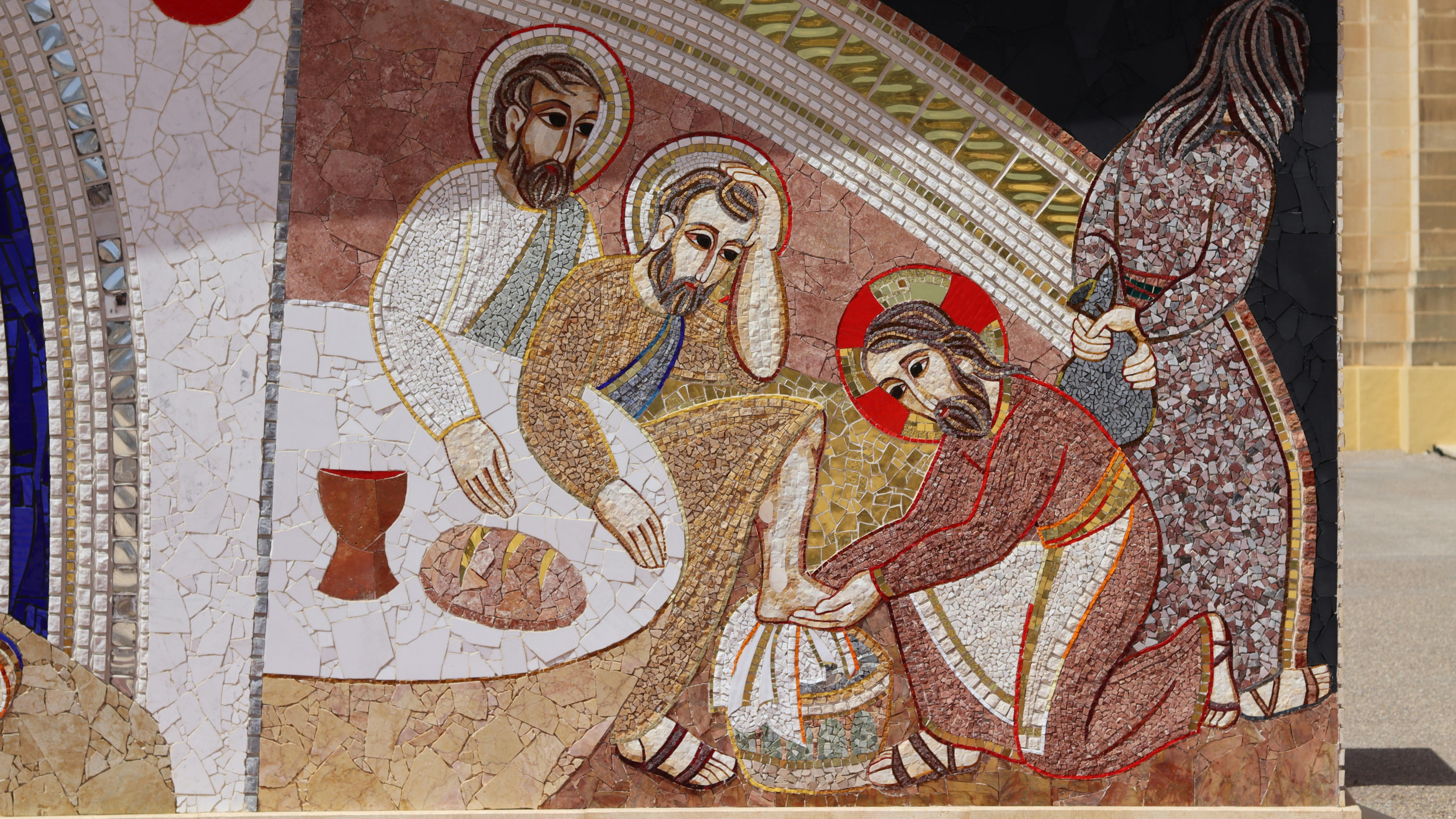
My husband Sheraz and I have been involved in discipleship ministry for over a decade. The challenge we have faced is that while students in our bible study enjoy being served at the table, they are reluctant to serve others, wash dirty dishes, or clean up. The underlying issue is a deep-seated sense of entitlement. From their perspective, serving others is a lower job, sometimes even associated with one’s gender, and it diminishes honor and dignity. Although our students learn about Jesus’ humble service to his disciples (Jn. 13:14), we have noticed a gap between their biblical knowledge of serving others and its application to their daily lives. In this devotional, I will focus on how Jesus expressed his love for His disciples “to the end” by washing their feet. I will also provide a reflection on John 13:1-17 applied in the Pakistani context.
Jesus knew that His hour had come (vv. 1-11)
Jesus, in his divine knowledge and authority, knew that his time on earth was about to be completed. The specific reference to “hour” in v. 1 (“Jesus knew that his hour had come”) indicates his crucifixion and resurrection. Jesus, foreseeing the intensity of subsequent events, demonstrated his self-giving love for his disciples to the end. Craig Keener suggests, “By prefiguring his death in his act of service to his disciples, he indicates the cost he is ready to pay to save them.”1 While all were eating, Jesus stood up, wrapped a towel around His waist, and took a basin filled with water. He lowered Himself, bent forward, and washed His disciples’ feet, including Judas Iscariot. When Jesus approached Peter, Peter wouldn’t let Jesus wash his feet. Knowing Jesus Christ is the Lord and “the Holy One of God” (John 6:68-69), Peter viewed Jesus as occupying an honorable position, and the washing of feet was a lowly job. In the context of first-century Palestinian Judaism and the Greco-Roman world, the washing of feet was a menial job performed by slaves or servants. Keener writes, “In both early Jewish and Greco-Roman texts, foot washing frequently connotes servitude.”2 When Peter told Jesus, “You shall never wash my feet, [and] Jesus answered him, if I do not wash your feet, you have no share with me” (v. 8), the “share” here indicates that Peter belongs to Jesus Christ and has a share in eternal life. The conversation between Jesus and Peter in vv. 6-10 highlights Peter’s journey to realization. Culturally, it was a challenge for Peter to see Jesus in the serving role. However, spiritually, he could not let go of his portion with Jesus Christ. Thus, Peter dared to accept Jesus’ service. Jesus, meanwhile, inverted the traditional role of a Lord, demonstrating a new principle of self-giving love for His disciples to follow. The incarnate Word served His weak and imperfect disciples. He knew that they had shortcomings; yet, He gave His life on the cross for their welfare. Jesus showed His disciples that one who is in a position of authority and honor should serve others. A spiritual leader should love and serve his disciples.
The disciples must imitate Jesus Christ (vv. 12-17)
As we see in verse 12, Jesus gave His disciples time to reflect on why He served them. He also affirmed their understanding of His Lordship and His position as their Teacher, and at the same time, He challenged them: if I, your Lord and Teacher, have washed your feet, you ought to wash one another’s feet too (vv. 13-14). The verb ὀφείλετε (opheilete) is “should or ought”; the disciples were bound in Christian obligation to serve one another. They were called to imitate the example of love that Jesus demonstrated to them (v. 15). Jesus focused on how the disciples ought to live after He had returned to the Father. Judith Schubert, RSM, calls it “unqualified love for one another, such love translates to acts of humble service and forgiveness.3” Jesus knew that Peter would deny Him publicly and that Judas would betray Him (vv. 2, 38), yet He demonstrated self-giving love to them. Jesus set an example of humble service and forgiveness even for those who betrayed Him. Thus, Jesus concluded the section in v. 17 by emphasizing that knowing how to love one another is not enough until it is exercised in one’s life. Believers are called “blessed” when they imitate the sacrificial love of Jesus Christ by loving, forgiving, and serving one another.
Transcending Cultural Views About Service
Similar to first-century Palestine, social roles, gender, and work influences how a person is perceived in Pakistan. A person in a subservient role is perceived to come from a lower socioeconomic background. The gestures of folding one’s hands or slightly bending forward are used not only to convey respect but also signals a person’s lower socioeconomic or religious status. No one would like to be seen in such a humbled state, as culturally it brings suffering and humiliation. This worldview, opposite to the biblical view, is present in our homes, churches, and fellowships. Our disciples find it difficult to serve one another. Ironically, Jesus Christ, who knew His divine origin and destination, humbly bent down and washed His disciples’ feet. Following our Lord, we must therefore change our perspective on serving one another. Service is an integral part of showing Christian love, and the “cross” is the tangible expression of it. Churches and fellowships in Pakistan practice the foot-washing ceremony; however, serving one another demands more than a ceremony. Loving a fellow believer to the end in daily life demands readiness to serve others regardless of socioeconomic status or traditional gender roles.
Believers are called to imitate the servant love that Jesus Christ demonstrated to His disciples (v. 15). They ought to serve one another despite social identity, values, and beliefs. Cultures can only be freed from cultural vices when Christ’s culture is allowed to transform it. In this case, we must challenge cultural norms by imitating the servant love of Jesus Christ. Christian life demands active service for one another. Biblical knowledge about serving others is not enough; applying it in practical life is obligatory. This is how we are identified as the disciples of Jesus Christ: by demonstrating sacrificial love to one another (v. 35).
- 1 Craig S. Keener, “The Ultimate Model for Love and Service,” in The Gospel of John: A Commentary, 2 vols. (Grand Rapids, MI: Baker Academic, 2003), 903.
- 2 Keener, “The Ultimate Model for Love and Service,” The Gospel of John, 904.
- 3 Judith Schubert, RSM, The Gospel of John: Question by Question (Eugene, OR: Wipf & Stock, 2016), 109.

Sana Sheraz is currently a student in the PhD program in Biblical Studies of BSOP-AGST. She is married to Sheraz Aftab and has two kids: son Isaac is 15, and daughter Ismaiah is 5. Sana serves in Pakistan with her husband, focusing on discipleship ministries. She has previously taught at St. Thomas’ Bible College, Karachi, Pakistan, from 2017 to 2023. When not teaching or undertaking ministerial duties, she likes spending more time with Isaac and Ismaiah.