
| April 2, 2026
Remaining Through the Pruning
“Remain in me as I also remain in you”
The last night before the cross. It is important to remember when Jesus spoke these words. He did not deliver this teaching from a hillside on an ordinary afternoon. He spoke it in the upper room, on the night he was betrayed, the very eve of Maundy Thursday, just hours before Gethsemane, before the arrest, before the long and terrible road to Calvary. The disciples did not yet know what morning would bring. But Jesus did. And knowing everything that was coming, he chose to speak not about suffering first, but about staying. This is the pastoral heart of Holy Week. Before the Via Dolorosa, before the nails, before the cry of desolation from the cross, Jesus gathered his friends and said: “Remain in me.” As if to say, what you are about to walk through will tempt you to run, to hide, to despair. Do not. Stay.
The image of the vine takes on new weight when read in Holy Week. Wine, after all, is pressed from the grape. The fruit of the vine, that same fruit Jesus spoke of in John 15, reaches its fullness only through crushing. On the night he instituted the Lord’s Supper, Jesus took the cup of wine and said, “This is my blood of the covenant, which is poured out for many” (Matt 26:28). The vine, the wine, the blood: in Holy Week, these images converge. When Jesus said “I am the true vine,” he was not offering a comfortable pastoral metaphor. He was pointing ahead, to a body broken, to bloodshed, to a death that would become the source of all life. The branches abide in the vine that was crushed for them. This is the mystery at the center of our faith, and Holy Week is the season given to us to sit with it, unhurried.
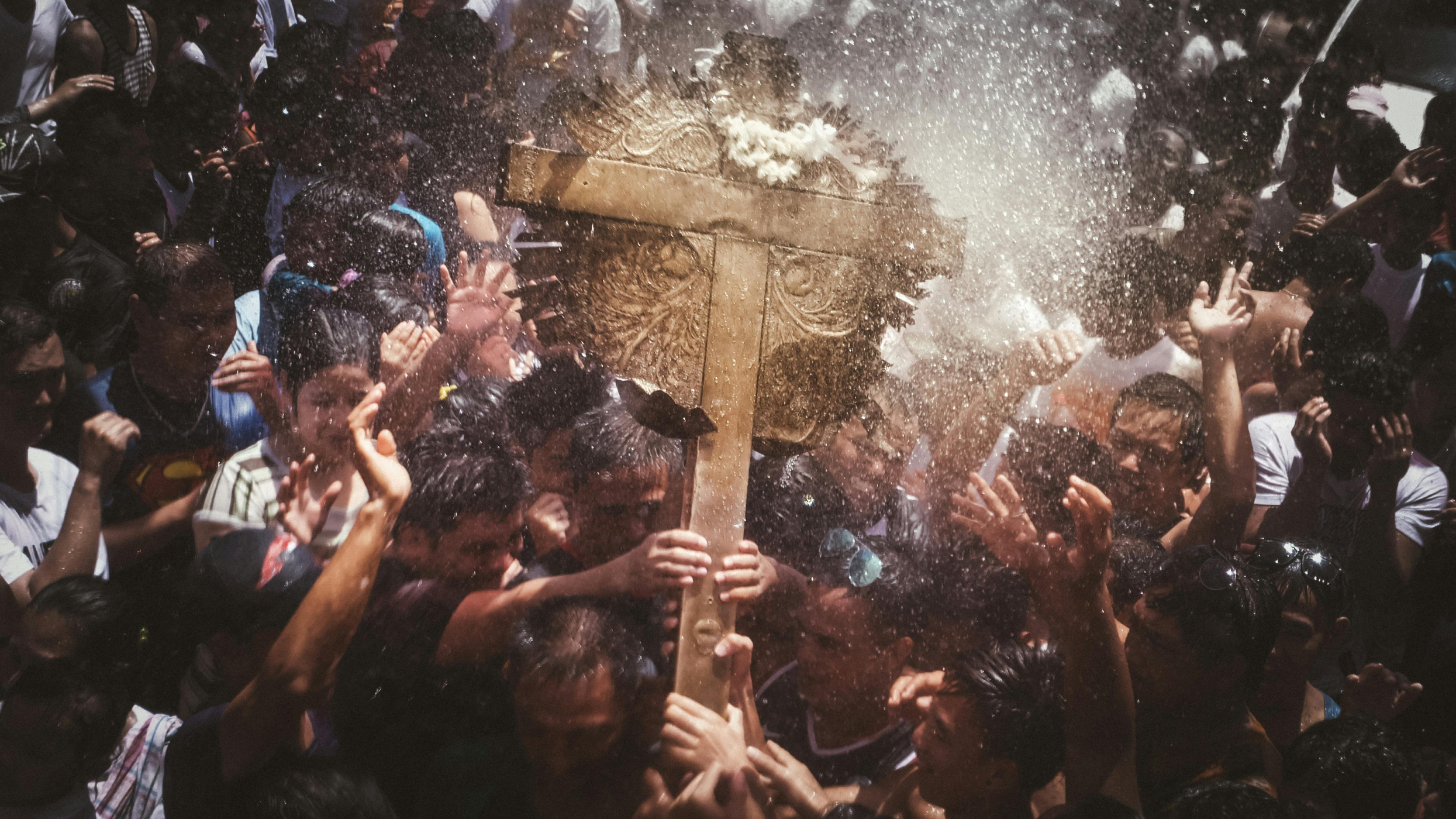
Abiding through the darkness means staying with Jesus even when we fail. The disciples did not – Peter denied him, the others fled, and Judas had already gone. Yet what we find in John 15 is that the vine did not let go of them; he remained. This is what Holy Week quietly teaches, especially in Filipino practice, from Visita Iglesia to Good Friday’s silence and the hope of Salubong. We walk with Jesus, yet we also see ourselves in the disciples: afraid, fragile, uncertain of God’s nearness. In such moments, the pruning Jesus spoke of can feel like abandonment. But he speaks into that fear: the Father is not absent. The vinedresser is present, tending even in the dark, already preparing for new life.
Good Friday reveals the meaning of pruning in John 15: branches that do not abide wither, but those that remain, even through darkness, suffering, and the silence of holy Saturday, bear fruit in time. Filipino Holy Week practices like fasting, Siete Palabras, and Senakulo embody this abiding, choosing to stay near the cross rather than rush to Easter. For the path to resurrection does not bypass Calvary; the fruitful branch is the one that remains on the vine through the cutting.
Jesus did not end this passage in sorrow. He ended it in joy, his own joy, made complete in us (v. 11). And this is the Easter promise folded inside a Holy Week teaching. The vine was crushed, but it was not destroyed. The branch that seemed cut off, that lay cold in the tomb for three days, burst into resurrection life on the third morning. All of Holy Week is moving toward this, toward the moment when the gardener’s work is revealed not as destruction but as abundance. The Salubong, that beautiful pre-dawn ritual where the risen Christ and the grieving Mary meet in the streets, captures something essential about John 15. The one who said “remain in me” is the same one who returned. He did not leave his friends as orphans. He came back to the vine, so that we might remain in him forever.
As you walk through these sacred days, from the tenderness of the upper room on Thursday, through the grief of the cross on Friday, through the silence of Saturday, to the joy that breaks open on Sunday morning, carry this word with you: remain. When the liturgy feels long, remain. When the silence of Holy Saturday feels like absence, remain. When the alleluia finally rises and the bells ring and the dawn comes, remain still, in gratitude, in wonder, in love. The fruit of a life hidden in Christ is not produced in a single season. It grows slowly, over years of faithfulness, of prayer, of showing up again and again at the foot of the cross and the door of the empty tomb. Holy week is the invitation to begin again, or to continue, that quiet, life-giving act of abiding.
For further reflection we may inquire: As you walk through Holy Week, which moment in the Passion story do you most identify with and what does that tell you about where you are in your relationship with Christ? Is there an area of your life where God may be pruning you right now? How does knowing the vinedresser’s purpose change how you receive that pain? How can you and your community practice abiding together during these holy days, not rushing past the cross toward Easter, but staying with Jesus through the whole week?

Rev. Dr. Rolex M. Cailing is a Langham Scholar and Langham-published author who currently serves as Senior Pastor of LifeReach Churches, Program Director of Biblical Studies at BSOP-AGST, and Research Professor of New Testament at the Center for Biblical Studies Institute and Seminary (CBSIS) in Antipolo City, Philippines. His research interests include Pauline theology and ethics, biblical theology, Second Temple Judaism, and the interface between Bible and culture, and he has written and published several related works. He and his wife Agnes have three children, Alexa Maira (22), Lex Paulus (13), and Lex Markus (10).