
| April 21, 2026
When Silence Speaks: Hearing God in Asian Spirituality
Introduction
You will make known to me the path of life; In Your presence is fullness of joy; In Your right hand there are pleasures forever. – Psalm 16:11 (NASB 1995)
When one is truly in God’s presence, there is peace and inner harmony. When the soul, mind, body, and spirit are in alignment, there is integration. In Hebrew, this is captured in the word shalom; the opposite is shabar or brokenness.1 Applied to the human interior, shabar points to a disintegrated inner life marked by dissonance and chaos. This inner disorder affects our relationship not only with God, but also with ourselves and others. When inner disorder persists unaddressed, we enter what many today recognize as spiritual dryness, a common affliction in our fast-paced and achievement-driven world.
In Asia, the symptoms of spiritual dryness are mirrored in societal issues. Take, for instance, karoshi, a Japanese term meaning “death from overwork.”2 This phenomenon is so prevalent that it is estimated to claim thousands of lives each year. Researchers are still exploring the underlying mechanisms, but the reality of death from overwork shows that when someone is drained emotionally, spiritually, and physically for too long, it eventually wears the body down completely.
The symptoms of spiritual dryness manifested even more visibly during the COVID-19 pandemic. The global lockdown in 2020 uncovered the fragile state of people’s mental and spiritual well-being.3 No culture, no status, and no religious affiliation was exempt. Christians, too, were deeply affected, as some who attended our gatherings—both online and in person—shared experiences of new bouts of depression and anxiety during the lockdown.
The Evangelical Pursuit: When Doing Replaces Being
In Asia, Christians active in ministry are especially vulnerable to this crisis. Between building a career, raising a family, and serving in the church, many juggle too much, leaving them emotionally spent and spiritually barren. As Solomon confessed in Ecclesiastes 1, even with all his toil and pursuits, he found weariness and dissatisfaction. What’s more troubling is that in many church communities, particularly evangelical ones, the response to spiritual dryness tends to be superficial. We look for comfort, but not necessarily in the right places. At times, even well-intentioned programs do not truly nourish the soul. Many of them are loud, euphoric, and fleeting in their effect.
Over my 27 years in ministry—serving in both pastoral roles and seminary teaching across different cities—I have observed three common responses among Christians struggling with burnout:
- First, we seek more Bible knowledge. While this is essential, we often prioritize the head over the heart, resulting in an emotionally disconnected reading of the Bible.
- Second, we dive into Christian activism, organizing or attending events that often distract us from confronting our inner brokenness. These gatherings can become addictive because of the spiritual “high” they offer, yet we fail to reach the core of our soul’s thirst.
- Third, we resort to addictions. In secret, we try to numb the pain through shopping, overeating, binge-watching dramas, or overusing social media. Some even fall into sexual sin. My wife and I, through our healing groups under the ministry of Living Waters Philippines, have heard many confessions of people falling into addictive patterns to numb their pain inside.
These responses show that we have lost our ability to truly listen to God, to our own hearts, and to the Word that can speak into our silence. This is ironic because, historically, under the influence of ancient religions, Asians have valued inwardness, contemplation, and respect for the sacred. Can we reclaim these practices and apply them to our hearing of the Word?
The Cost of Noise and Healing in Silence
What is happening to us?
- We misdiagnose burnout, attributing it only to external pressures while failing to address the deeper relational and emotional stressors.
- We continue to ignore past wounds and traumas, such as childhood neglect or unresolved grief, which are quietly eroding our spiritual vitality.
- We become obsessed with “doing”, believing that more activity can fix what’s broken inside. We lose the discipline of “being”, of pausing and reflecting in the presence of God.
The Scriptures consistently point to stillness as a way forward. Psalm 46:10 invites us, “Be still and know that I am God.” In Psalm 62:5, David writes, “For God alone, my soul waits in silence; from Him comes my salvation.” These are not passive suggestions. They are calls to active waiting, to attentive stillness where the Word of God is heard not just with the ears but with the heart.
David knew how to isolate himself and focus on God, especially during seasons of guilt, fear, and discouragement. He cried out, not for attention, but in authenticity. He meditated not on his performance but on his belovedness before God.
Hearing the Word: A Biblical and Asian Perspective
Silence and solitude are not modern therapeutic inventions. They are deeply rooted in biblical spirituality and resonate with the contemplative traditions of Asia.
Moses, once timid and unsure, was transformed at Mount Horeb, where he encountered the burning bush in solitude (Exodus 3). There, in the stillness of the desert, he received a Word that redefined his life and calling. Centuries later, Elijah, discouraged and even suicidal, also went to Horeb. God didn’t speak to him through the fire, wind, or earthquake, but through a gentle whisper (1 Kings 19). The Word came not in noise, but in the hush of holy presence. Even Jesus, the Word Incarnate, often withdrew to lonely places to pray (Luke 5:16). John 1:18 says that Jesus was in the “bosom of the Father,” a phrase that, in the original context, describes someone resting his head on another’s chest. That intimacy was the foundation of His ministry.
This resonates with Asian spirituality, where closeness to the divine is nurtured through silence and reflective solitude. In many Asian cultures, silence is a virtue.
Our Story: Learning to Listen Again
My wife and I are not strangers to burnout. We’ve had our share of emotional breakdowns, spiritual dryness, and toxic relationships. We searched for relief in the wrong places. But during a season of desperation, while living on the campus of the International Graduate School of Leadership, I began spending time in the library—not to prepare for lectures, but to seek shalom for my soul. There, I encountered the writings of the Desert Fathers, the Reformers, and the Puritans. They taught me the wisdom of silence and the necessity of solitude. I saw how I had been avoiding the inner life, even while serving God. As a result, my wife and I decided to reprioritize. We surrendered our striving and turned to the practice of contemplative stillness. God met us in that space. He healed us from our addictions, our wounds, and our restlessness.
This led us to start In His Presence, a contemplative retreat we’ve been running since 2010. It’s a weekend of silence and guided reflection, designed for those longing for spiritual breakthroughs. It’s not a seminar. It’s not another Christian program. It’s a space to be still, to listen, and to rest.
I have heard “retreat” defined as:4
- A time spent jealously, and entirely, with God.
- A time of serious thinking.
- A time of aligning the heart with God.
- A time of listening with openness.
- A time of renewal by the Holy Spirit.
We encourage our retreatants to cultivate a father-child relationship with God that goes beyond busyness and performance. Silence is strictly observed. Talking is suspended to help each one hear God’s voice more clearly.
In silence, profound things happen:
- “Even fools are thought wise if they keep silent, and discerning if they hold their tongues.” (Proverbs 17:28)
- “If I’m not in touch with my belovedness, I cannot touch the sacredness of others.”5
- “When our absence from people means a special presence to God, then that absence becomes a sustaining absence.”6
We also set up prayer stations—interactive stations on themes like forgiveness, idols of the heart, inner fatigue, and surrender. These help each person reflect and respond at their own pace. As Richard Foster said, “The desperate need today is not for more intelligent people or gifted people, but for deep people.”7
The Invitation To Asian Christians Today
Having facilitated this retreat for more than a decade, we’ve seen God’s healing time and time again. People come weary and dry but leave with joy, peace, and renewed purpose. Truly, in His presence, there is fullness of joy. Jonathan Edwards wrote that holy desire, expressed in hunger and thirst for God, is a vital part of true religion.8 That desire is within us, and God is waiting for us to respond by simply being still.
Even science now affirms what the Scriptures have long declared: silence and contemplation are good for the brain.9 They reduce stress and promote healing. But more importantly, they reorient us to the voice of God.
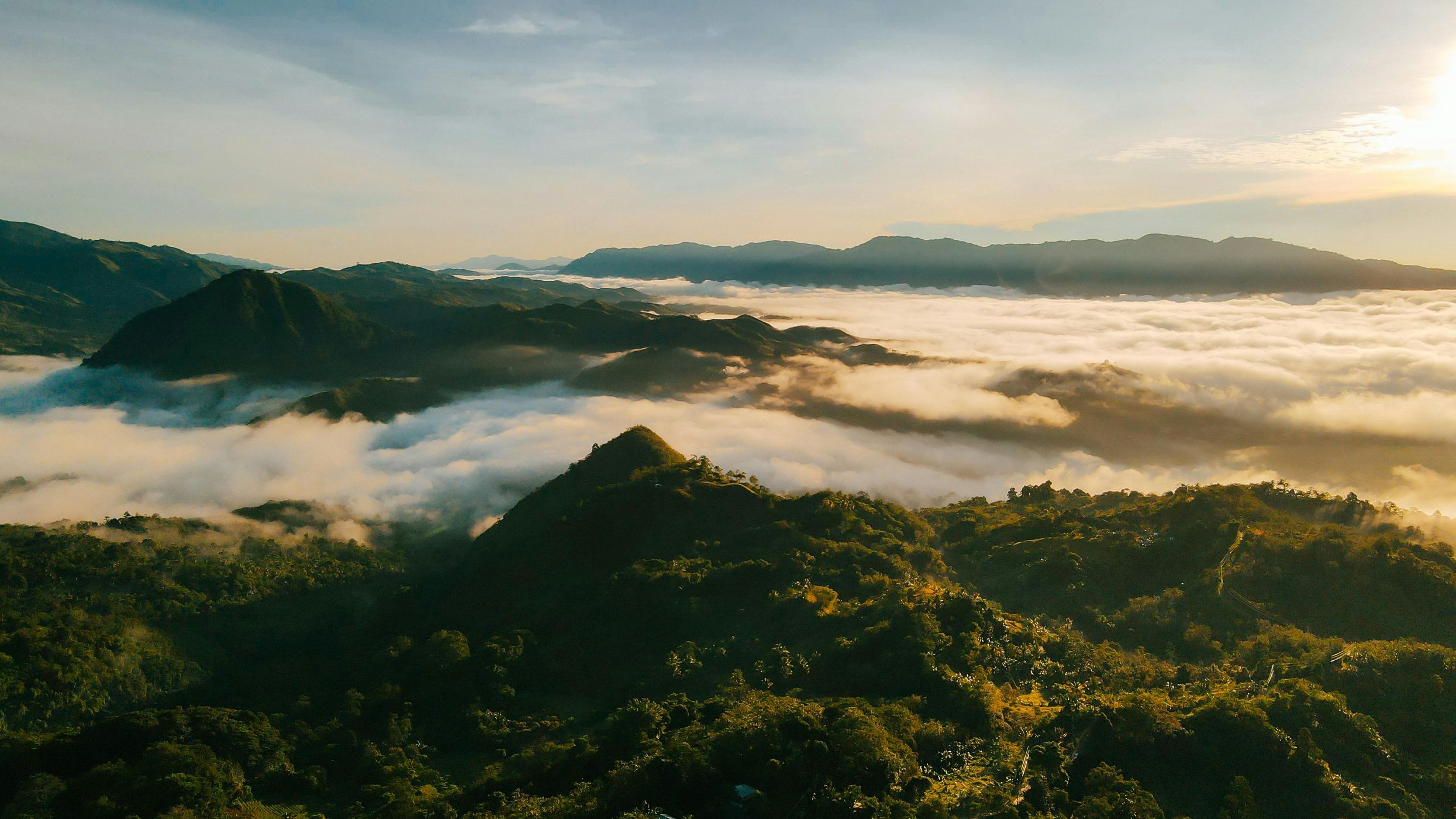
Friends, in your pain and confusion, choose God’s presence. Don’t drown your longing in entertainment or distractions. Take time, even a few hours, for silence. It can be in your room, in a car, or on a mountain. I often go to Baras, Rizal for my own time of solitude. Sometimes, I wake up early, while it’s still dark and quiet, just to be still and listen.
When we are alone with God, we receive:
- Rest for our weary bodies
- Renewal for our minds
- Restoration for our souls
- Rejuvenation for our spirits
Martin Luther once said, “I have so much to do that I shall spend the first three hours in prayer.”10 He understood that fruitfulness flows from intimacy, not busyness.
So, I leave you with this: there is nobility in pursuing your God-given path. But that journey will not be without trials—dryness, betrayal, confusion, pain. When the world turns against you, don’t pour your sorrow into addictions. Pour it before God. Let us drink from the Water of Life and eat of the Bread of Life. Let us return to the Lover of our souls. For when we are restored in His presence, we can live again with joy, vitality, and hope. As St. Augustine prayed, “Thou hast made us for Thyself, O Lord, and our hearts are restless until they rest in Thee.”11
- 1 Brown-Driver-Briggs (BDB) Hebrew and English Lexicon, s.v. שׁלם (shalom); שׁבר (shabar) = “to break, break in pieces”.
- 2Blaine Harden, “Japan’s Killer Work Ethic,” The Washington Post, July 13, 2008. https://www.washingtonpost.com/archive/national/2008/07/13/japans-killer-work-ethic/7eb0e8b9-67f8-4f63-8aa7-451cbab6e03e/ (accessed 14 April 2026).
- 3 “COVID-19 pandemic triggers 25% increase in prevalence of anxiety and depression worldwide,” World Health Organization, 2 Mar 2022. Available at: https://www.who.int/news/item/02-03-2022-covid-19-pandemic-triggers-25-increase-in-prevalence-of-anxiety-and-depression-worldwide (accessed 14 Apr 2026).
- 4 IGSL Annual Spiritual Retreat handouts from Dr. Leo Armas, 2011.
- 5 Brennan Manning, Abba’s Child: The Beloved (San Francisco: Harper San Francisco, 1994), 108.
- 6 “Vitality of Spiritual Retreat for those who Minister.” Missio Nexus, 1 Oct 2013. Available at: https://missionexus.org/uncategorized/vitality-of-spiritual-retreat-for-those-who-minister/ (accessed 14 Apr 2026).
- 7 Richard J. Foster, Celebration of Discipline: The Path to Spiritual Growth, rev. ed. (San Francisco: Harper San Francisco, 2009), 1.
- 8 Jonathan Edwards, A Treatise Concerning Religious Affections (London: Printed by J. Dawson for the Reverend … (1754), part 1, section 4 (“Desire for Holiness”).
- 9 “Why Silence Is So Good for Your Brain,” HuffPost, 14 March 2016. Available at: https://www.huffpost.com/entry/silence-brain-benefits_n_56d83967e4b0000de4037004 (accessed 30 Oct 2025).
- 10 Cited in James Gilchrist Lawson, Cyclopedia of Religious Anecdotes (New York: Harper & Brothers, 1923), 303.
- 11 Augustine of Hippo, Confessions, I.1.5.
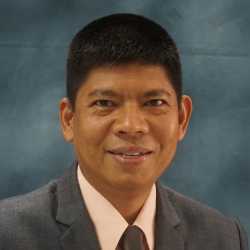 Dr. Rod Santos earned his doctorate from Westminster Theological Seminary. He teaches at the International Graduate School of Leadership and the Biblical Seminary of the Philippines. He leads Global Aid Network Philippines, a humanitarian partner of Cru. On weekends, he and his wife lead contemplative retreats focused on inner healing and spiritual renewal.