| May 27, 2026
God’s Bayanihan: Pentecost and Participation in God’s Mission
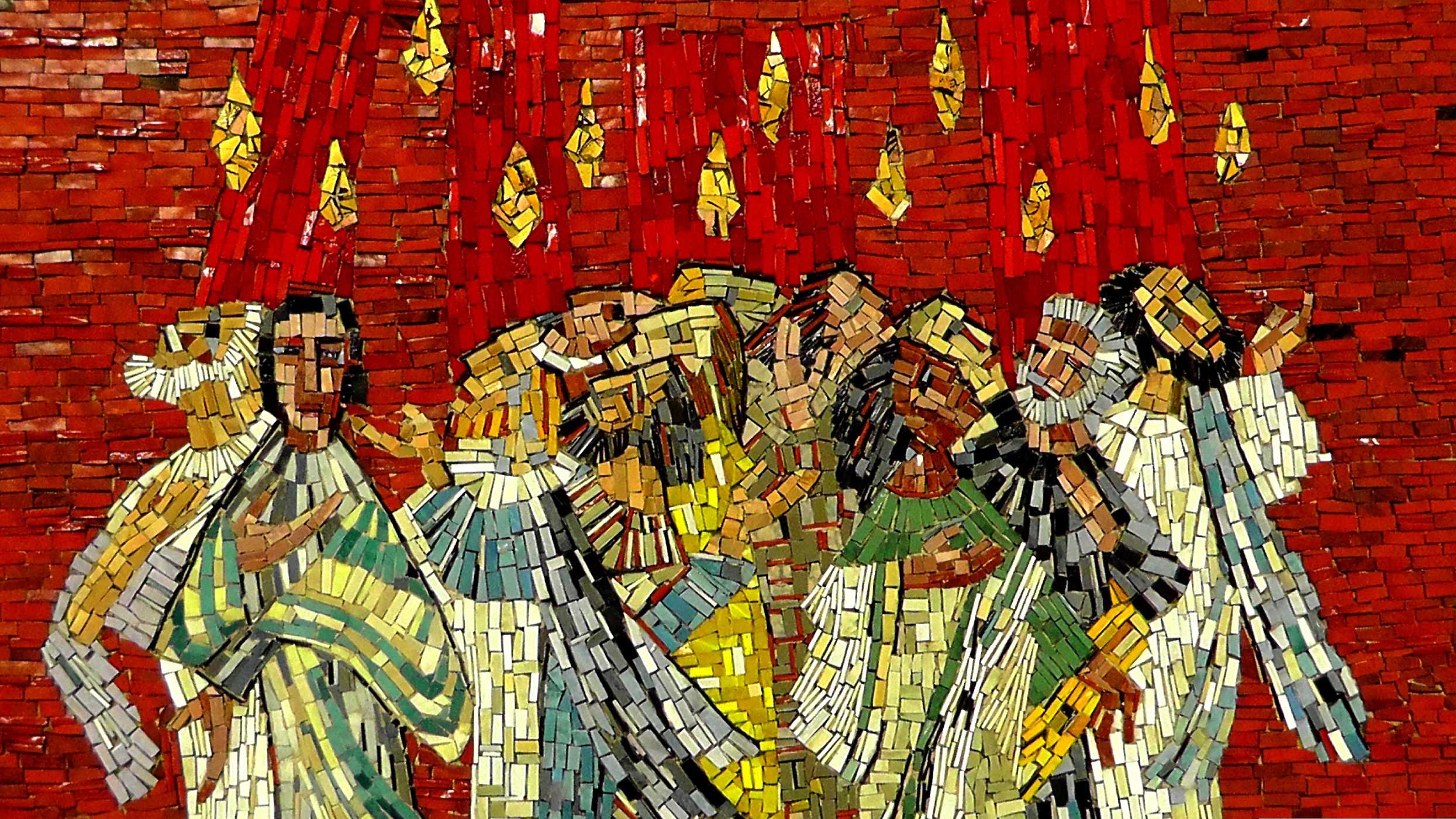
We are likely already very familiar with the story of Pentecost. As learners and leaders, we have studied the rushing wind. We have digested the commentaries on the tongues of fire. We recognize that historically and theologically, Pentecost is the birthday of the church as we know it.
But when we look closely at Acts 1 and 2, we can discover once again, or perhaps for the first time, fresh insights that speak to a community committed to theological inquiry. Such insights offer us a quiet sense of direction as we briefly explore here three components of Pentecost and participation in God’s mission: a season of waiting, the gathering of the multicultural community, and the reassuring truth that it is not us who bring the mission forward.
A Season of Waiting
Before the wind and the fire, there was a quiet and uncertain season of waiting for the disciples. Just before he ascended, Jesus told them not to leave Jerusalem, but to wait for the promise of the Father. He said, “You will receive power when the Holy Spirit comes on you; and you will be my witnesses … to the ends of the earth” (1:8).
Waiting isn’t easy. Seasons of intense focus are often an “in-between” time all their own, filled with hopes that our efforts will lead to a meaningful milestone—a completed project, an acquired skill, or an academic credential. Plenty of us understand what it means to be far from home while anticipating the shape of the next chapter of life and ministry. It can feel like sitting in a government office, waiting to obtain a formal document. We can prepare the paperwork, but we ultimately rely on a higher authority to move forward.
As dutiful followers of Jesus in their time, the disciples were waiting for the ultimate promise of God’s power. And we already know the outcome of this waiting. God, as God does, delivered on his promises. God did indeed bring his power, and the disciples’ waiting time came to its fulfillment. With that power came life, and from that life came a translation.
The Gathering of the Multicultural Community
Consider the demographics of Jerusalem during that most memorable of harvest festivals: God-fearing people from every nation under heaven filled the city: Parthians, Medes, Elamites, residents of Mesopotamia, Egypt, Rome, Cretans, and Arabs (2:9-11). When the Spirit fell, God did not force everyone to learn a new, uniform religious language. Instead, God “broke the mold” by meeting people exactly where they were. The crowd became utterly bewildered because “each one heard their own language being spoken” (2:6).
For a community of learners, this is not only a biblical story for our reflection. As faithful exegetes, we know it is also a bridge into our daily reality. At times, we have the opportunity to work and live alongside people from different countries, cultures, and denominations. Together, we are a living reflection of those gathered nations. When the crowd saw this multicultural miracle, they asked one another, “What does this mean?” (2:12).
It signifies that the Gospel is too expansive to be bound by any single cultural expression. It means God is already at work bridging the gaps between us.
Grace Does the Moving
Sometimes, when we talk about missions, the message can come across as quite burdensome: Reach the nations! Do the seemingly impossible! But Pentecost shows us a different rhythm; it shows us that it is God’s grace that does the moving.
We do not have to manufacture the mission, as if we could. We do not have to strive in our own strength to make something happen. Rather, it is the Spirit who has initiated the conversation and who brings forth the discovery. The Spirit drew the crowd. The Spirit provided the translation. The disciples simply stepped into what God was already doing!
Such is the beauty of participating in God’s mission today across the vibrant cultural intersections of our territories of Asia and beyond. The nations are among us. Whether we are in a seminar room in Manila, sharing a meal with a colleague from a different background, or walking through our neighborhood, God is already active. God is already there, fashioning hearts. Our glad response is to open our eyes to the current of grace that is already flowing—and step into it.
We share our hope gently and naturally (1 Peter 3:15). We listen. We relate. We realize that our very presence together, as a multicultural community united in Christ, is a profound witness to the world. We are the only Bible some people will ever read, and our unity in diversity speaks volumes.
In the Philippines, we are deeply familiar with the beautiful cultural tradition of bayanihan—where a community gathers to literally lift and move a neighbor’s bahay kubo (nipa hut) to a new location. Everyone puts a shoulder to the bamboo poles to share the heavy burden. Pentecost transforms this image for us. In God’s bayanihan, it is the Holy Spirit who actually carries the weight of the house. The invitation is to place our shoulders alongside his and walk together in the direction God is already moving.
In this Pentecost season of our life and work, the invitation is not to carry the weight of the world on our shoulders. The old invitation remains the new one—to participate. God has fulfilled his promise. The Spirit is present, active, and alive!
So if God’s grace is already doing the moving, here is one question for our further reflection:
What is one burden in “manufacturing the mission” that you can lay down this season?
May we continue to “come and see” what the Spirit is already doing among us. And as grace moves us, may we effortlessly “go and tell”—sharing his wonders anew with the people around us.
Happy Birthday, Church!
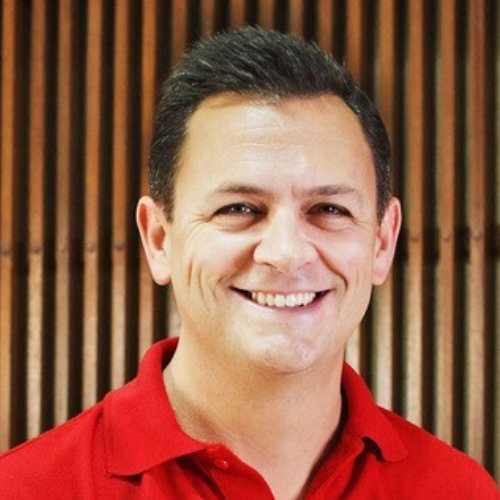
Noah Kennedy serves as the Associate Pastor of Union Church of Manila. After an early background in business operations, he later pursued formal theological training, seeking to blend thoughtful stewardship with a shepherding heart. Since arriving in the Philippines in 2015, much of his pastoral work has centered on spiritual formation and cultivating meaningful Christian community. Together with his wife, Ali, he co-leads the church’s international engagement initiatives, welcoming and connecting newcomers through hospitality and intentional discipleship. Noah and Ali, along with their four children, are deeply grateful to call the Philippines their home away from home.