| July 17, 2026
Poverty and the Christian Faith: Reflections on a Conversation with Dr. Kumar Aryal
Introduction1
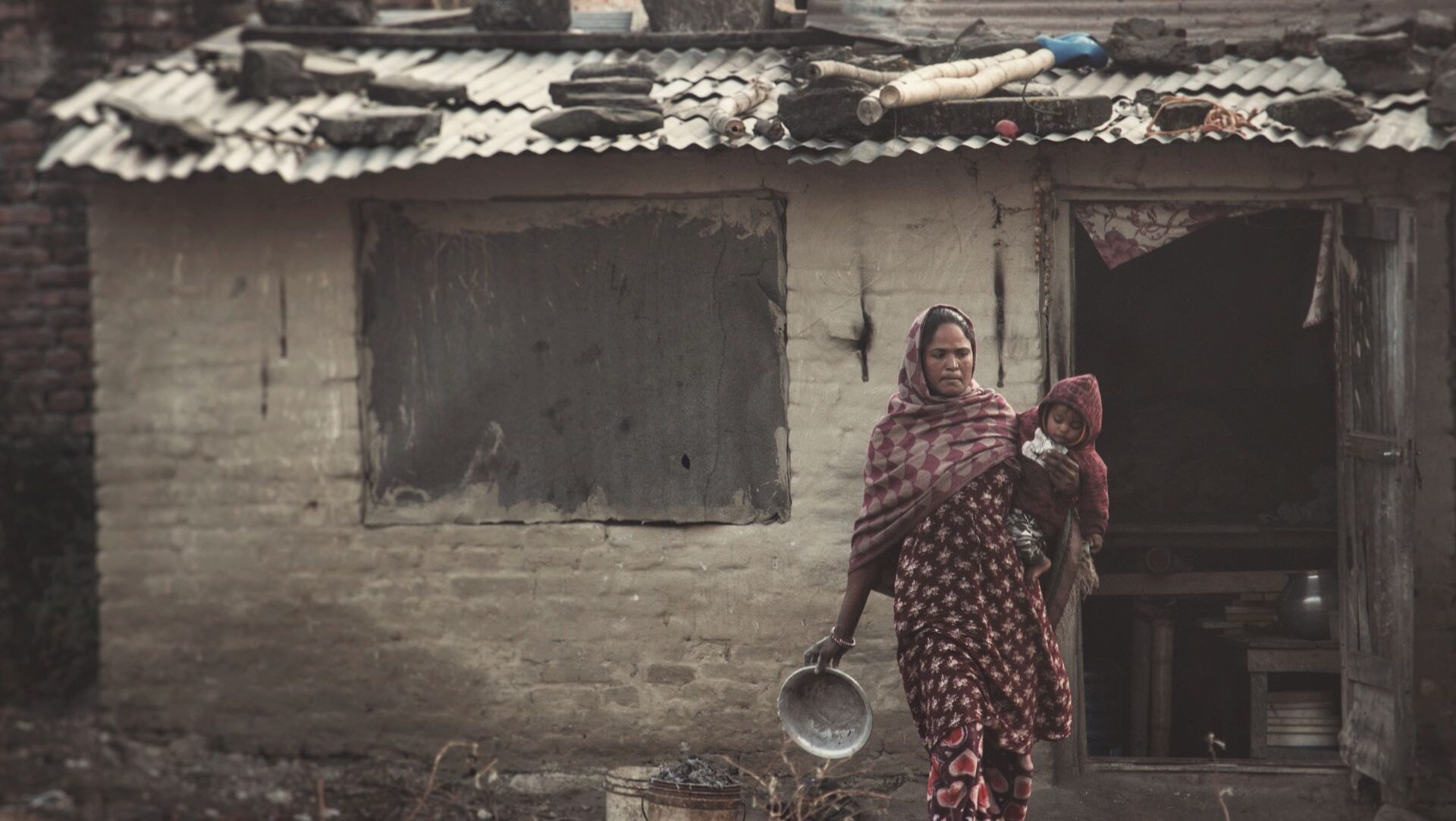
In much of Asia, poverty is more than just a social or economic issue—it’s a deeply ingrained theological and cultural reality. Poverty shapes identity, affects social mobility, influences religious views, and often delineates the line between the powerful and the vulnerable. For many communities across Nepal, India, Southeast Asia, and beyond, poverty is viewed through the lenses of fate, karma, shame, honor, and divine punishment.2 For the church, this raises a complex yet urgent question: How does Christian faith shape our understanding and response to poverty?
In this interview, the Center for Theological Inquiry in Asia (CTIA) speaks with Dr. Kumar Aryal, a Nepali missionary, missiologist, and author of Poverty and Development: Evangelical Christian Response to Poverty in the Philippines. His reflections are more than just academic; they come from personal experience. Born and raised in Nepal—one of the poorest countries in the world—and having served among vulnerable communities in Nepal and the Philippines, Dr. Aryal has seen poverty firsthand.
For him, the theological conversation doesn’t begin in the library but among people experiencing poverty. “I was born and raised in Nepal… which allowed me to witness and experience poverty up close and personal,” he shares. His early ministry work with migrant workers and impoverished communities ignited a lifelong commitment to connecting missional practice with biblical justice and holistic transformation.
Scripture and the Story of the Poor
Christian tradition has long recognized that the story of Scripture is closely linked to the story of the poor.3 The God of Israel commands his covenant people to open their hands to the needy (Deuteronomy 15:11), defend widows and orphans (Isaiah 1:17), and promote systemic justice through practices such as the Jubilee (Leviticus 25). Jesus begins his ministry through Isaiah: “The Spirit of the Lord is on me… to proclaim good news to the poor” (Luke 4:18).
For Dr. Aryal, Scripture offers a comprehensive view of poverty—one that extends beyond financial issues: “The Bible actually talks and provides a comprehensive understanding of poverty… not only material poverty but also social, psychological, and spiritual poverty.”
This multi-layered understanding challenges narrow views of mission that see poverty solely as a lack of material possessions. Lamentably, for many churches today, the poor are still approached merely as an opportunity for evangelism or as passive recipients of charity, rather than as persons bearing God’s image, embedded in complex social realities, and called to participate in God’s renewing purposes. The biblical witness reveals a God who identifies with the poor—most powerfully through Jesus’s incarnation.4
Dr. Aryal asserts, “Jesus not only showed compassion… He identified with the poor. He was born into a poor, working-class family.”
This identification establishes the foundation for Christian mission: proclamation must go hand in hand with participation, compassion, and justice.5
Moving Beyond Charity Toward Transformation
Many churches begin with charity—feeding programs, medical missions, relief efforts—and while these are important, Dr. Aryal warns against stopping there. “Charity is a good starting point,” he affirms, “but our response… must not end in charity.” If churches remain in relief mode, they might inadvertently foster dependency and paternalism.
Instead, the Christian response must focus on long-term, relational change—what missiologists call integral mission, where evangelism and social justice are intertwined.6 “Churches should not try to strike a balance,” he argues. “They should integrate evangelism and social transformation.”
A strong example is an after-school tutorial and feeding program run by Dr. Aryal’s team in Nepal. Local teachers mentor children, a church planter builds relationships, and meals address nutritional needs. Over time, this effort has resulted not only in academic progress but also in significant spiritual and community transformation, including the planting of several churches.
“It is possible to present a holistic gospel through actions,” he concludes. “The keyword is intentional.”
Asian Culture: A Challenge and a Gift
Poverty in Asia is never viewed as neutral; it is interpreted through deeply embedded cultural and religious frameworks that shape how communities understand suffering, responsibility, and hope.7 “In many Asian contexts, poverty is often linked to fate, karma, or divine punishment,” Dr. Aryal notes.
Christians should approach these beliefs with honesty and compassion. For Dr. Aryal, relational trust—not argument—is the foundation: “We establish rapport before challenging belief systems… and then we share the truth in love.”
Furthermore, Asia emphasizes cultural strengths that align well with Scripture. Community values like bayanihan (community cooperation or cooperative endeavor) in the Philippines or sangha (harmonious body or assembly of believers) in Nepal reflect principles seen in the early church (Acts 2:42–47).
“Asian communal values promote interdependence,” he says, “which provides a natural link to biblical community and justice.” In this way, Asian culture is not only a missional challenge but also a theological resource.8
Local Theology and the Voice of the Poor
The Center for Theological Inquiry in Asia emphasizes grounding theology in Asian realities—Scripture is interpreted not only through Western frameworks but also through the lived experiences of the Asian church. Dr. Aryal wholeheartedly agrees: “Local theology is essential—it is a necessity… It enables the gospel to be contextualized in local culture, language, worldview, and community.”
Without contextual theology, poverty is often misunderstood or oversimplified. Even well-designed Western development models fail if they do not see people experiencing poverty as agents instead of objects.
Borrowing from Bryant Myers’ Walking with the Poor: Principles and Practices of Transformational Development, Dr. Aryal observes that poverty often results from “relationships that do not work”—broken connections with God, self, others, and creation.9 Therefore, the church’s work is not solely about sharing resources but also about restoring relationships and making disciples.
The Church as Companion—Not Savior
One of the biggest changes needed in the Asian church, according to Dr. Aryal, is moving from just serving the poor to walking with them. “Walking with the poor,” he insists, “means solidarity—not just service.” It mirrors the rhythm of Christ himself, who “dwelt among us” (John 1:14).
This shift changes discipleship from a private, personal growth journey into a communal, embodied, and shared experience among people living in poverty. In this way, he explains that “discipleship becomes more holistic—integrated into daily life rather than compartmentalized.”
Among the poor, the gospel is not just believed — it is felt, shared, and lived.
Hope, Formation, and a Call to Action
After years serving vulnerable communities, Dr. Aryal reflects on what he has learned about God: “God sees, and God cares for the poor… He is generous, and his kingdom restores dignity to those the world overlooks.”
When asked what message he would share with the Asian church, Dr. Aryal’s response is both pastoral and prophetic: “Take time to understand the holistic definition of poverty before helping the poor… Walk with them, not just serve them. Remember that the poor are created in the image of God.”
Conclusion: Encountering Christ Among the Poor
For CTIA readers—pastors, scholars, missionaries, and theological educators—the conversation with Dr. Aryal reminds us that theology shouldn’t stay confined to the classroom. Like Jesus, the church must engage with areas of suffering, not just as rescuers but as companions.10
Poverty, when viewed through Scripture, isn’t a barrier to spiritual life—it’s often the very place where Christ’s presence, power, and compassion are most deeply felt. The church’s mission, then, is not just to fix poverty, but to bear witness to the kingdom where the poor are seen, valued, and restored. Walking with the poor, then, is like walking with Christ.
- 1 This article draws on a public conversation between John Regolo S. Leones, Jr. and Dr. Kumar Aryal. Selected excerpts and insights from that interview were used with Dr. Aryal’s permission.
- 2 This already complex social landscape is further intensified by religious tensions, the marginalization of minority communities, and the pressing need for churches to engage people of other faiths constructively while navigating potential conflicts. Robert M. Solomon, “Southeast Asian Churches at the Global Church Roundtable,” in Missions in Southeast Asia: Diversity and Unity in God’s Design, ed. Kiem-Kiok Kwa and Samuel K. Law (Cumbria: Langham Global Library; Asia Theological Association, 2022), 254–55.
- 3 Scripture speaks with remarkable consistency across its authors and genres about the poor, making concern for them a central biblical theme—so central that to read the Bible without noticing the poor is to miss one of its main threads. Notably, the poor are often drawn to this God of dignity and freedom, while those more secure tend to emphasize Scripture’s spiritual dimensions. Rupen Das, Compassion and the Mission of God: Revealing the Invisible Kingdom (Cumbria, UK: Langham Global Library, 2016), 21.
- 4 Tim Keller, “The Gospel and the Poor,” Themelios (2008), 33:3:22.
- 5 C. René Padilla, Mission between the Times (Cumbria: Langham Monographs, 2013), 189.
- 6 Winfield Bevins, Liturgical Mission: The Work of the People for the Life of the World (Downers Grove, IL: IVP, 2022), 124–25; Christopher J. H. Wright, The Mission of God: Unlocking the Bible’s Grand Narrative (Downers Grove, IL: IVP Academic, 2025), 397–98.
- 7 Vimal Tirimanna, “Asian Theology,” in The Oxford Handbook of Catholic Theology, ed. Lewis Ayres and Medi Ann Volpe (Oxford: Oxford University Press, 2019), 886.
- 8 R. S. Sugirtharajah, “Asian Theologies,” in The Dictionary of Historical Theology (Carlisle, Cumbria, U.K.: Paternoster Press, 2000), 36–37.
- 9 See also JoAnn Butrin and A. Chadwick Thornhill, “Defining Poverty and Need,” in For the Love of God: Principles and Practice of Compassion in Missions , ed. Jerry M. Ireland (Eugene, OR: Wipf & Stock, 2017), 61; John Cheong and Eloise Meneses, Christian Mission and Economic Systems: A Critical Survey of the Cultural and Religious Dimensions of Economies (Pasadena, CA: William Carey Library, 2015), 20–21.
- 10 Darby A. Strickland, When It’s Trauma: A Biblical Guide to Understanding Trauma and Walking Faithfully with Sufferers (Phillipsburg, NJ: P&R Publishing, 2025), 34–35; Carl F. H. Henry, God, Revelation, and Authority (Wheaton, IL: Crossway Books, 1999), 4:544–45.

John Leones Jr. is a faculty member and current chair of the Theology Department at International Graduate School of Leadership. He is married to Awit and has two children, Tim and Triny. An ordained minister and church planter, he previously served as the pioneering pastor-teacher of Borongan City Evangelical Church in Borongan City, Eastern Samar, Philippines. He is currently pursuing his PhD in Theological Studies with AGST.