| November 3, 2026
Asian Lived Theology Through a Pneumatological Lens
Introduction
I have always been fascinated with revivals. Famous revivals like the First and Second Great Awakenings in the 1700s and 1800s or the Azusa Street Revival in the early twentieth century mark clear points of the Holy Spirit’s special work in the world. While some revivals were characterized by signs and wonders, the more important evidence of revival has always been conviction of sins and turning to Christ in faith. If we look throughout church history, we can see many influential examples of revival.
The Asian church is also the product of revivals. By this, I do not mean that the church was “revived” per se, but that Asian churches can trace their origins back to the Holy Spirit’s powerful work in particular times and places. The pattern of Asian revivals is similar. Native peoples were resistant to the Gospel. Foreign missionaries toiled for years without seeing much fruit. But suddenly, there was a breakthrough. The Holy Spirit began to work powerfully, softening hardened hearts. Local evangelism took place at large scale, spearheaded by local evangelists, many of whom were women. Despite resistance and persecution, the church grew and established roots.
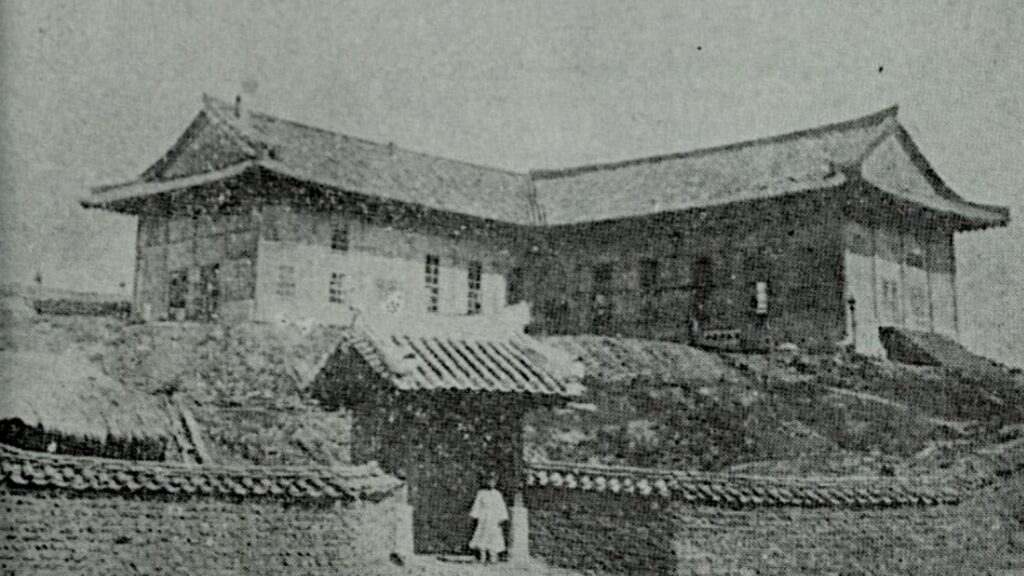
The best-known example of Asian revival is probably the Pyongyang Revival of 1907 in Korea, which saw hundreds of thousands turning to Christ in only a few years. Other famous revivals include Pandita Ramabai’s Mukti Mission in Maharashtra, India, in 1905, or the Shandong revivals in China in the 1920s and 30s. We cannot forget the many tribal revivals that took place across Asia in the late 1800s and early 1900s, e.g., amongst Nagas and Mizos and Khasis in Northeast India, Karen and Chin and Kachin in Myanmar, Batak and Minahasan and Dayak in Indonesia and East Malaysia, etc. Many countries also saw revival in the time after WWII and national independence, e.g., Indonesia, Korea, China, Singapore, and others. Many Christians in Asia can trace their church lineages back to these types of revival moments.
Doing Theology through Pneumatology
Theologically, the idea of revival raises important questions. How do such events and realities shape the way that we do theology? How does the work of the Holy Spirit in history factor into our theologizing?
In systematic theology, the twentieth century saw a revived interest in pneumatology. As German theologian Jürgen Moltmann famously observed in 1992,
About twenty years ago it was usual to introduce studies on the Holy Spirit with a complaint about ‘forgetfulness of the Spirit’ at the present day generally, and in Protestant theology in particular. The Holy Spirit was said to be the Cinderella of Western theology.1
By the time of Moltmann’s writing, theologians like Yves Congar, Clark Pinnock, and even Wolfhart Pannenberg, had attempted to do justice to pneumatology in their own scholarship. The increasing popularity of pneumatology could even be seen in the 7th assembly of the World Council of Churches (WCC) in 1991, which was titled “Come, Holy Spirit—Renew the Whole Creation.”2 Yet, as Moltmann again observes, this interest “had to be specially cherished and coaxed into a growth of its own.”3
It is also worth noting that this newfound theological interest in the Holy Spirit in the twentieth century took place at the same time many revival moments were taking place. Twentieth century revival movements like Azusa Street or the “second” and “third” waves of charismatic revival in the 1960s and 1970s led to greater reflection on the person and work of the Holy Spirit. Whether in theology or revival, it is evident that the Holy Spirit (and pneumatology) was having its moment.
But how have theologians approached theology through the lens of pneumatology? How did the Holy Spirit’s work in the world shape how theology was being done? While many theologians have addressed this issue, I will examine two who have made significant contributions to pneumatology and its impact on theological methodology: Jürgen Moltmann and Amos Yong.
Jürgen Moltmann
Jürgen Moltmann is widely considered one of the greatest theologians of the twentieth century. While Moltmann’s earlier and more famous works like Theology of Hope (1965) and The Crucified God (1972) do not deal much with pneumatology, Moltmann took greater interest in the Holy Spirit later in his career.4 The Spirit of Life is Moltmann’s first major foray into pneumatology. Some of the major contributions of the book include his arguments for the Spirit as the giver of life, which forms the foundation for the Spirit’s work in liberation or in ecotheology, and his arguments for a more egalitarian model of divine relations. However, an issue that Moltmann wrestles with earlier on in The Spirit of Life, which is relevant for this essay, is how he accounts for the personal experience of the Holy Spirit as part of the theological process.
The Spirit of Life begins with an overview of contemporary issues in pneumatology.5 Some of these include ongoing ecumenical discussions about the Spirit, the antithesis between revelation and experience or immanence and transcendence in dialectical theology (e.g. Barth’s response to liberal/pietistic theology), the neglect of the Spirit’s work in creation and the forced antithesis between the redeeming Spirit (Spiritus sanctificans) and creating/animating Spirit (Spiritus vivificans), and general theological tension between the experience and the person of the Holy Spirit. Responding to these issues, Moltmann’s goal is to “develop a trinitarian pneumatology out of the experience and theology of the Holy Spirit.”6
In the first chapter, Moltmann establishes the groundwork for the “experience of the Spirit” through the idea of God’s “immanent transcendence,” which he explains in this way:
It is therefore possible to experience God in, with and beneath each everyday experience of the world, if God is in all things, and all things are in God, so that God himself ‘experiences’ all things in his own way.7
Moltmann does not want to ground the experience of God in the human experience of self, which is a flaw of liberal and pietistic theology. However, he also recognizes the importance of grounding the experience of God in the experience of sociality and nature. For Moltmann, this balances between immanence and transcendence, recognizing the personal experience of God that takes place in everyday life, but not limiting God to an object one experiences. Central to perceiving God in all things is God the Spirit, who is the animating and sustaining force of all creation, the “wellspring of life.”8
In the second chapter, Moltmann builds on the idea of the historical experience of God through the experience of God’s Spirit in the people of Israel. He observes that the Hebrew word ruach refers to God’s presence and to the conferring of life; it is “the space of freedom in which the living being can unfold.”9 Moltmann also relates ruach to “Shekinah,” which describes “the descent and indwelling of God in space and time, at a particular place and particular era of earthly beings and in their history”—it is the presence of God himself in the Spirit.10
In the third chapter, Moltmann turns to the New Testament to examine the relationship between the Christ of the Spirit and the Spirit of Christ and their mutual dependance. For Moltmann, the Spirit indwells and empowers Christ but also experiences Christ’s descent and suffering. The Spirit raises Christ from the dead and mediates Christ’s presence to the church. In this way, pneumatology unites Christology and eschatology. This in turn leads Moltmann to reexamine the filioque to argue for the Son’s dependence on the Spirit.
While Moltmann says a great deal more about the Holy Spirit, his pneumatological work surveyed here pushes back against Trinitarian subordination and takes seriously the experiential aspect of the Holy Spirit’s work. Moltmann’s vision for pneumatology would greatly influence many who came after him.
Amos Yong
Amos Yong is a Malaysian (Chinese) American Pentecostal theologian who has done a great deal to advance Pentecostal theology. His entire corpus reflects a continuing conviction to integrate pneumatology into the theological method.
For example, in 2005’s The Spirit Poured Out on All Flesh, Yong sets the table for a pneumatologically centered Pentecostal theology, examining major doctrinal loci like salvation and ecclesiology through the lens of the Spirit.11 In Spirit-Word-Community, Yong approaches hermeneutics in an intentionally Pentecostal manner, incorporating the Holy Spirit into the process of theological interpretation.12 Yong is probably most famous for his work in the theology of religions, in which he argues for the Spirit’s work in creation and the world more broadly as a starting point for dialogue with other religions.13 However, I will examine a concept in his theology that epitomizes his Pentecostal and pneumatological turn: the “pneumatological imagination.”
Yong describes the genesis of this concept in this way.14 As a young Pentecostal scholar, he grappled with how Pentecostalism could contribute to the growing theological interest in pneumatology and to the recent turn to the Spirit in theology of religions. Yong’s contribution, which would end up defining the rest of his work, was to turn to the Pentecost narrative in Acts 2 and the “pouring out of the Spirit on all flesh.” For Yong, a theological turn to Pentecost not only demonstrates the opening of the Spirit to the many languages and cultures of the world but could also be helpful for thinking about Christian interaction with people of other faiths.
Additionally, the Pentecost narrative “depicts the work of the Spirit not only in abstract theological but in concrete personal and historical terms.”15 Yong continues:
God, by the Spirit, is not only present among human creatures but also active within and between them. In other words, the turn to pneumatology was not exclusively theological but also anthropological. This equation must also be stated otherwise: the turn to pneumatology is not only anthropological but is also simultaneously theological.16
For Yong, the Pentecost event could serve as a starting point for thinking theologically because of how it grounded God’s presence in and among humanity. However, Yong avoided the reduction of Spirit into spirit by affirming the Spirit’s person and work through Trinitarian relations: the Pentecost event itself is “theologically funded in the work of the Spirit of Christ poured out on all flesh from the right hand of the Father.”17 Other aspects of the pneumatological imagination include experiential realities of the Spirit (e.g. indwelling of physical bodies and its corporate and religiously phenomenological nature), the Spirit’s engagement in the world in/through/with cultures, and the “democratic comprehensiveness” of the Spirit’s “impersonal enablement,” seen in the inclusion of all genders, ages, and social classes in the fulfillment of Joel 2:28-32 in Acts 2:17-18.
The essence of the pneumatological imagination is summed up well in this quote:
From this perspective, it might be added, all Christian theology is Pentecostal—or Pentecost-based—and charismatic, if only implicitly then in a way that this chapter seeks to render more explicit: we confess Christ only in and through the Spirit and therefore also think, particularly theologically, in the Spirit.18
The pneumatological imagination, then, is an explicitly Pentecostal epistemology that begins with pneumatology.19 Yong, however, does not limit this concept to Pentecostalism—it is helpful for anyone wanting to take the ongoing presence and work of the Spirit seriously in theology.
Asian Lived Theology through a Pneumatological Lens
Moltmann and Yong both argue for the importance of pneumatology for theological methodology.20 But are their contributions helpful for Asian theology? While our work need not be as philosophical as theirs, the answer is yes. Both writers build a strong basis for pneumatological theology in Asia that encourages those doing theology to take the real work and presence work of the Holy Spirit more seriously in theological method.
Asian theologians can begin by asking some basic and fundamental questions. What has the Holy Spirit been doing among us? How has the Holy Spirit shaped us through that work? What does the Spirit’s work teach us about who God is and what God has been doing? What is the Spirit doing now and how do we discern that work?
My point is this: the past and ongoing work of the Holy Spirit in churches across Asia can teach us a great deal about our lived theologies.21 Rather than continuing to see the Spirit’s work in a theoretical way, Asian Christians have the work of the Spirit in recent and living memory to turn to as a source of theology. Revivals, therefore, serve as clear examples of the Spirit’s work in the theological formation of people. Part of the task of Asian theology is for Asian Christians to tell the stories of the Holy Spirit work amongst them and to reflect, in turn, on that work.
Let us consider some examples. The Pyongyang Revival of 1907 has garnered a great deal of scholarly interest because of its scale and speed, especially in the spiritually resistant Korean context of that time.22 To examine this event through a pneumatological lens is not only to examine the ecstatic and emotional responses or the widespread evangelism. But it is also to examine the work of the Holy Spirit within the Korean church in areas like the development of Korean spirituality, the contextualization of theological terms and concepts, etc. It could also be to compare the Korean experience with other contemporary revivals (e.g. Azusa Street, Wales, Mukti Mission) to see what the Spirit was doing uniquely in Korea. It may also be to examine the social and spiritual soil preceding revival to examine how the Spirit prepared the ground (preparatio evangelica).23 Traditionally, historical and theological studies, even in Christian and evangelical contexts, will lean on sociological or historical analyses, reflecting the academic bias for “objectivity” and not factoring in the possibility of the supernatural. However, Asian scholars can better learn how to not divorce themselves or the supernatural work of God in their scholarship, but how to integrate them as Asian Christians.
In the uncertain world we are living in today, there is a great and urgent need to discern the Spirit’s movement and leading. Many Asian nations are facing severe social, political, and economic issues, which are causing a great deal of despair. In parts of Asia, churches are declining.24 To examine our current lived theologies through a pneumatological lens means to discover where and how the Spirit is at work, even in places and ways unexpected. It is to find hope in the fact that the Spirit is present, even when we cannot always see or feel it. It means to study and to pray, to grow in our wisdom and discernment. Do you know where the Spirit is leading your churches now? What is the Holy Spirit saying to Baptist churches, to Presbyterian churches, to charismatic churches, to traditional churches, to contemporary churches? Where is the Spirit directing the church in the Philippines, in Thailand, in China, and throughout Asia? How can we (the Asian church) walk in step with the Spirit today?
- 1 Jürgen Moltmann, The Spirit of Life: A Universal Affirmation (Minneapolis, MN: Fortress Press, 1992), 1.
- 2 Especially controversial was Korean feminist theologian Chung Hyun-Kyung’s shamanist performance in which she called upon oppressed spirits.
- 3 Moltmann, The Spirit of Life, 1.
- 4 For the shift to pneumatology in Moltmann’s theology, see D. Lyle Dabney, “The Advent of the Spirit: The Turn to Pneumatology in the Theology of Jurgen Moltmann,” The Asbury Theological Journal Vol. 48 No. 1 (Spring 1993), 81-107. Dabney argues that part of the reason for the lack of interest was due to existing tendencies within the Reformed tradition that Moltmann has inherited.
- 5 Moltmann, Spirit of Life, 2-14.
- 6 Moltmann, Spirit of Life, 14.
- 7 Moltmann, Spirit of Life, 34.
- 8 Moltmann, Spirit of Life, 35.
- 9 Moltmann, Spirit of Life, 43.
- 10 Moltmann, Spirit of Life, 47.
- 11 Amos Yong, The Spirit Poured Out on All Flesh: Pentecostalism and the Possibility of Global Theology (Grand Rapids, MI: Baker Academic, 2005).
- 12 Amos Yong, Spirit-Word-Community: Theological Hermeneutics in Trinitarian Perspective (Eugene, OR: Wipf & Stock, 2006).
- 13 See Amos Yong, Discerning the Spirit(s): A Pentecostal-Charismatic Contribution to Christian Theology of Religions (Sheffield: Sheffield Academic Press, 2000); Amos Yong, Beyond the Impasse: Toward a Pneumatological Theology of Religions (Grand Rapids, MI: Baker Academic, 2003).
- 14 Amos Yong, “The Pneumatological Imagination: The Logic of Pentecostal Theology,” in The Routledge Handbook of Pentecostal Theology, ed. Wolfgang Vondey (London: Routledge, 2020), 152-162. Yong gives credit to Lucien Richard for coining the term and to D. Lyle Dabney for developing “the Moltmannian pneumatological trinitarianism into a paradigm for thinking theologically in the present time and in light of the historical tradition.” See Yong, “The Pneumatological Imagination,” 152, 154. Other related terms include “pneumatology of quest,” which is the “attempt to live and walk according to the Spirit… a dynamic, dialectical, discerning theology of the question driven by ‘pneumatological imagination’” (Spirit Poured Out, 10), and “foundational pneumatology,” which is Yong’s attempt to “understand reality in pneumatological (trinitarian) terms while remaining accountable to and hoping to engage with a fully public discourse” (Spirit-Word-Community, 83).
- 15 Yong, “The Pneumatological Imagination,” 153.
- 16 Yong, “The Pneumatological Imagination,” 153.
- 17 Yong, “The Pneumatological Imagination,” 153.
- 18 Yong, “The Pneumatological Imagination,” 160.
- 19 See esp. Spirit-Word-Community, Part 2.
- 20 Another example is Third Article Theology: A Pneumatological Dogmatics, ed. Myk Habets (Minneapolis, MN: Fortress Press, 2016).
- 21 For lived theology, see Charles Marsh, Peter Slade, and Sarah Azaransky, eds., Lived Theology: New Perspectives on Method, Style, and Pedagogy (Oxford: Oxford University Press, 2016), esp. 6-10.
- 22 See esp. Sung-Deuk Oak, The Making of Korean Christianity: Protestant Encounters with Korean Religions, 1876-1915 (Waco, TX: Baylor University Press, 2013).
- 23 E.g. K. Kale Yu, Understanding Korean Christianity: Grassroots Perspectives on Causes, Culture, and Responses (Eugene, OR: Pickwick Publications, 2019). One relevant example of this is the issue of mass conversions of tribal peoples to Christianity and the extent of general revelation. For a popular account, see Don Richardson, Eternity in Their Hearts: Startling Evidence of Belief in the One True God in Hundreds of Cultures Throughout the World (Bloomington, MN: Bethany House Publishers, 2006).
- 24 This is especially true in developed countries. For example, in Singapore, Christianity dropped from 18.9% to 17.1% of the population from 2020 to 2025, while the non-religious rose from 20% to 23.9% (https://www.straitstimes.com/singapore/more-spore-residents-have-no-religion-in-2025-than-in-2020). In a 2025 Gallup poll from South Korea, only 24% of Koreans in their 20s claim to be religious, compared to 45% in 2004 (https://www.koreaherald.com/article/10730245). Even in China, Christianity may be stagnating (https://journals.sagepub.com/doi/10.1177/23780231241310469).

Dr. Justin Joon Lee is an Associate Professor of Systematic and Historical Theology at Singapore Bible College. He joined the faculty in 2019. Dr. Lee’s research interests lie largely in the field of Patristics. His research project as a Teach @ Tübingen fellow was on the exegetical methodology and sources of the fourth-century church father Basil of Caesarea. His doctoral dissertation examined the pneumatology of the third-century theologian Origen of Alexandria. He has also written and presented on the Antiochene Fathers. Before coming to Singapore Bible College, Dr. Lee served in pastoral ministry both in the States and in the UK, mostly in the Korean church and in parachurch ministries. (Source: Singapore Bible College)