
| June 13, 2026
Too Quick to Settle for “Good Enough”?
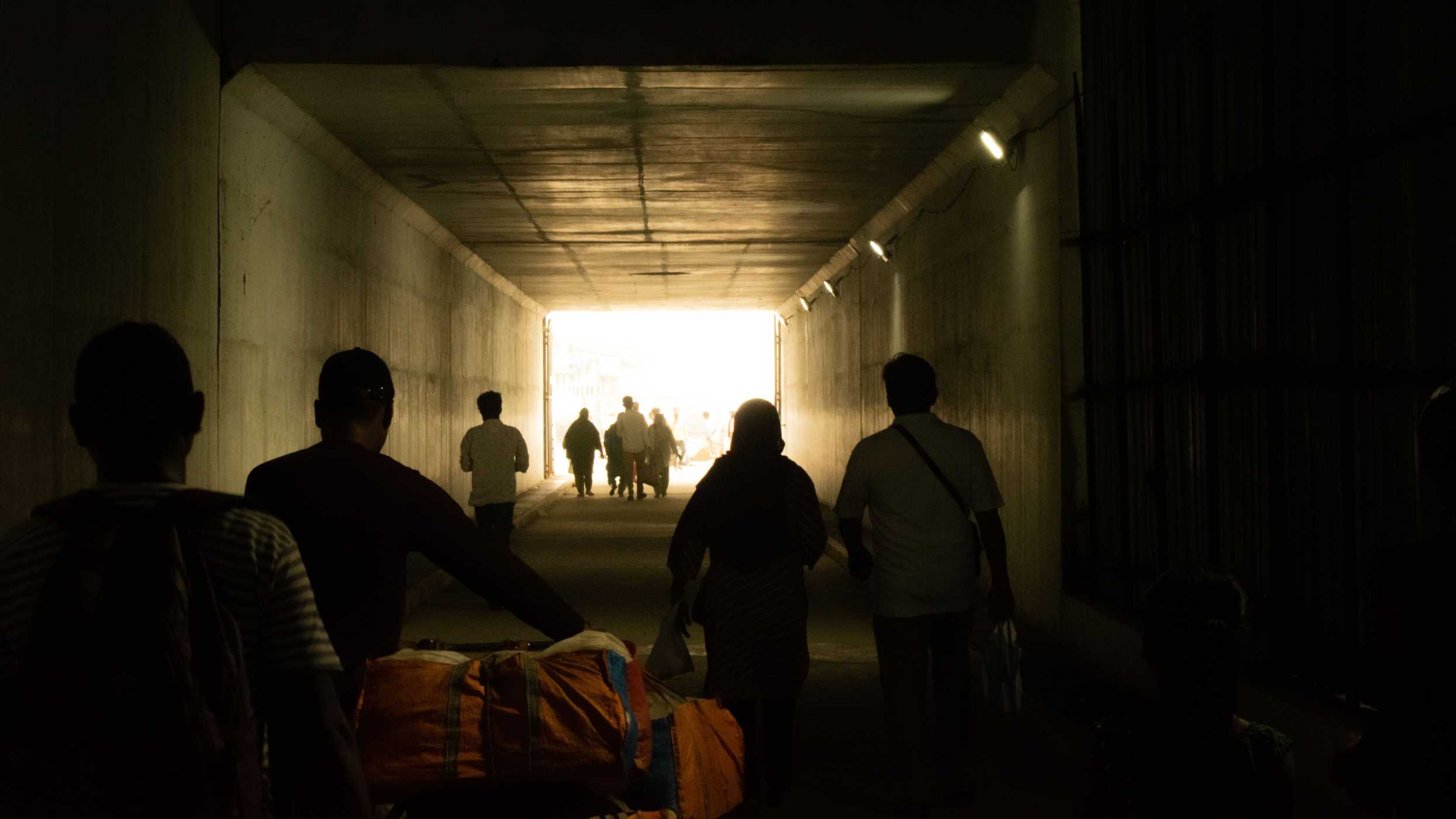
Have you ever asked God for something you were sure was the best for you, only to find out later that you settled? What you initially considered a blessing starts to become the source of your deepest insecurity, especially when you see others receiving something you could have had, had you not settled. Envy creeps in. Fear quietly takes hold of your heart. In the Bible, we see two of Israel’s tribes, the Reubenites and the Gadites, experience a similar dilemma in their journey toward God’s Promised Land.
A Blessing That Seemed Right
In Numbers 32, we are told that the tribes of Reuben and Gad possessed large herds and flocks. As they approached the lush lands of Jazer and Gilead, east of the Jordan River, they realized that the land was perfect for their livestock. It made sense to settle there. It was practical. So they approached Moses with a request: “If we have found favor in your eyes, let this land be given to your servants as our possession. Do not make us cross the Jordan” (Num 32:5).1
At first, Moses was alarmed by their request, fearing it echoed Israel’s earlier rebellion in Numbers 13-14, when, fearful of the strength of the Canaanites, they refused to fight and take possession of the land. “Should your fellow Israelites go to war while you sit here?” Moses asked, “Why do you discourage the Israelites from crossing over into the land the Lord has given them?” (vv. 6-7).
Moses worried that the decision of the Reubenites and Gadites would sway the rest of the tribes to settle outside Canaan, hindering them from taking hold of God’s promise. However, the Reubenites and Gadites clarified that they would still cross the Jordan and help in the conquest. They would only return to settle in the east once every tribe had received their inheritance. They said: “We will not return to our homes until each of the Israelites has received their inheritance” (v. 18). Moses accepted the plan, and so the Reubenites and Gadites received the territories formerly ruled by Sihon and Og (v. 33). But while their intentions were sincere, Moses’ initial hesitance about their decision wasn’t misplaced.
When “Good Enough” Stands in the Way of Faithfulness
This moment in Israel’s history marked the first major negotiated compromise in their tribal unity. While the land east of the Jordan was suitable, it placed the tribes of Reuben and Gad geographically, and eventually spiritually, apart from the others. Psalm 133:1 reminds us of an ideal: “How good and pleasant it is when God’s people live together in unity!”2
The Reubenites and Gadites may have fought faithfully alongside their brothers, but their decision introduced a division that would have long-term consequences. In 1 Chronicles 5:25–26, we later see these eastern tribes fall to foreign invaders because, strategically, they were more vulnerable as they lived outside the natural protection of the Jordan River.
More strikingly, their physical separation risked miscommunication. In Joshua 22, for example, after the conquest, these tribes built a large altar near the Jordan. The other Israelites misunderstood the gesture, thinking it was an act of rebellion. They accused the Reubenites and Gadites of constructing a rival altar to the one true altar of God. The whole assembly of the Lord said to them: “How could you break faith with the God of Israel like this? How could you turn away from the Lord and build yourselves an altar in rebellion against him now? Was not the sin of Peor enough for us? Up to this very day we have not cleansed ourselves from that sin, even though a plague fell on the community of the Lord! And are you now turning away from the Lord? If you rebel against the Lord today, tomorrow he will be angry with the whole community of Israel” (vv. 16-18).
The people feared that the disobedience of a few would bring God’s judgment on everyone. They even offered the Reubenites, Gadites, and the half-tribe of Manasseh the chance to settle with the rest of Israel on the other side of the Jordan. As tensions escalated to the brink of civil war, the Reubenites and Gadites explained: “No! We did it for fear that someday your descendants might say to ours, ‘What do you have to do with the LORD, the God of Israel? The LORD has made the Jordan a boundary between us and you… You have no share in the Lord.’ So your descendants might cause ours to stop fearing the Lord’” (24-25). Cut off from their spiritual heritage, the eastern tribes feared being forgotten. So, they built the altar not for sacrifice but as a witness, a reminder that they too belonged to the Lord.
The tension caused by their separation from the rest of Israel would resurface in later generations. During Deborah and Barak’s campaign against the Canaanites, many tribes were praised because they “willingly offered themselves” for battle. But the Reubenites and Gadites were remembered not for courage, but for hesitation. The victory song records:
In the districts of Reuben
there was much searching of heart.
Why did you stay among the sheep pens
to hear the whistling for the flocks?
In the districts of Reuben
there was much searching of heart.
Gilead stayed beyond the Jordan. (Judges 5:15b-17a)
In this context, “Gilead” likely functions as a general designation for the population residing east of the Jordan River during this period, which included the tribes of Reuben, Gad, and part of Mannaseh. The tribes’ absence from battle was not due to lack of ability. In the past, they had fought bravely with their brothers and succeeded. 1 Chronicles 5:18 gives us a clue that they were capable warriors. However, given their comparatively smaller population, it is likely that they were unwilling to risk further losses. They weighed the call to arms against the demands of livelihood. After “much searching,” they chose the safety of their flocks over their kin. In the end, economic security carried more weight than covenant solidarity.
Lessons for Asia: Overseas Employment and Migration
Migration and overseas work are Asian realities that can be framed, just like the Reubenite/Gadite decision to settle away from their kin, as a spiritual risk. However, we must resist the temptation to draw a simplistic parallel between present realities and biblical narratives. Unlike the choice of the tribes to settle in lands that were suitable for their livestock, the case of migrant workers is not always a matter of convenience but of necessity. For vast populations living under persistent economic hardship, decisions are made mainly for survival even when this means prolonged separation from family.
In addition, looking at the spiritual dimension of this struggle reveals a deeper tension. One must choose between what is immediately necessary for physical survival and what is formative for one’s life with God. The question then shifts toward how choices made under economic pressure reconfigure practices of discipleship within the community of faith. Despite the differences between biblical and contemporary accounts of migration, we see similar patterns of compromise and striving toward faithfulness.3
For example, there is no denying that disruptions of family dynamics and church life arise as an unintended consequence of one’s decision to work overseas.4 Many leaders are understandably hesitant to affirm a member’s decision to leave for financial reasons, particularly when doing so means stepping back from active participation in church life (e.g., regular attendance, ministry, and community accountability). At times, this hesitation can cause leaders to quietly withdraw pastoral guidance from those preparing to go. As a result, they may later discover that these members have departed without adequate spiritual preparation, sometimes relocating to areas where access to a community of faith is minimal or absent.
Accepting the reality that some members may choose to leave out of economic necessity is perhaps more constructive. Leaders can then remain present, offering theological and pastoral guidance to help shape their members’ next steps. The aim is to ensure that departing members have viable options for spiritual care even in displacement.
As an example, a study on extending spiritual support for caregivers argues that migrant workers, including transnational mothers (women who live and work abroad while fulfilling their maternal role across geographic and national borders), are not only providers of care but are themselves in need of it.5 Their lived experiences reveal that faith is a crucial resource through which they make sense of separation and navigate the emotional burdens of transnational family life. In fact, many testify that their experience of God’s presence is central in shaping how they endure hardship and remain connected to their families despite physical distance.
Weighing Spiritual Risks and Support
The Scripture offers a timeless reminder that even well-reasoned decisions, those based on logic, practicality, or immediate needs—must be weighed spiritually. The Reubenites and Gadites chose what seemed best for their flocks, but that very choice introduced division, suspicion, and long-term spiritual consequences. Like Lot, who chose the fertile plains of the Jordan (Gen 13), they based their decision on what looked good without considering the spiritual risks.
Many of us make choices about work, relationships, or location based on what’s practical or financially sound. But there are times when we come to regret those decisions because we don’t consider how they would affect our faith, community, or spiritual growth. And for those whose decisions are driven by economic necessity, the church bears an obligation not to cut them off, but to remain present with them in sustaining their life of faith.
The tribes east of the Jordan were not abandoned by God, but their story serves as a sobering reminder: what God provides at the edges of his plan may still flourish, but the edges are where the wilderness begins. The danger isn’t just in choosing “the lesser option.” It’s in settling for what seems good when God may be calling us to something greater—even if pursuing it entails facing hardship and uncertainty. Even so, our God is gracious. He hears the honest cries of our hearts and, in his mercy, weaves his purposes even through our imperfect choices. In Ezekiel’s vision of the restored land of Israel (Ezekiel 48), both Reuben and Gad are allocated territories, implying their inclusion in God’s future restoration.
- 1 Notably, shortly before his death, Jacob described Reuben as “turbulent as the waters” to highlight his unreliable character (Gen 49:4).
- 2 Cf. Deuteronomy 25:5. Many interpret this verse in the context of pilgrimage to Jerusalem for the national festivals, which suggests that the blessing is not limited to those residing in the city but extends to all who gather there in worship.
- 3 A case can also be made that for many overseas workers, God has used their situation to lead them to the knowledge of God through their employers.
- 4 Ma. Adeinev M. Reyes-Espiritu, “Caregivers Need Care, Too: Conceptualising Spiritual Care for Migrant Caregivers-Transnational Mothers,” Religions 13, no. 173 (2022): 1–19.
- 5 See, for example, Yinni Peng and Odalia M. H. Wong, “Who Takes Care of My Left-Behind Children? Migrant Mothers and Caregivers in Transnational Child Care,” Journal of Family Issues 37, no. 14 (2015): 1–24.

C. Paul Mojica is a faculty member at the Center for Biblical Studies – Institute and Seminary. Since 2009, he has been serving as a Pastor-Elder of FCF-Baguio Mission Centre in Baguio City, Philippines. He contributes to collaborative works in philosophy and serves as an editor at Wise Ideas Publishing Co. Paul and his wife, Pauline, have been homeschooling their children, Paull Amos and Psalm Ayla. He is currently pursuing a PhD in Theological Studies with AGST.